Nobody Hands You the Rulebook: A First-Generation Guide to Finding Your Footing in a Research Lab

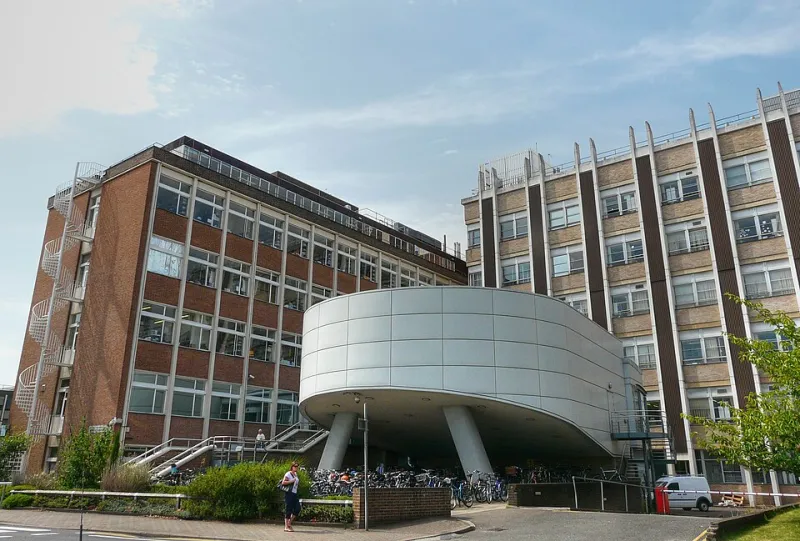
Photo: Judgefloro, Public domain, via Wikimedia Commons
There is a moment familiar to nearly every first-generation student who joins a research lab: you are surrounded by people who seem to have been raised in academic settings, fluent in a language of office hours, office politics, and off-hand mentions of the professor their cousin knows — and you are quietly trying to decode it all while also learning western blots.
This guide was assembled from conversations with members of our own lab who were the first in their families to attend college in the United States. None of what follows is secret. All of it is unwritten, and that is exactly the problem.
Reading a Paper Without Reading Every Word
New researchers often assume serious people read papers cover to cover, in order, with a highlighter. Most working scientists do not. The efficient approach is a three-pass method: read the abstract and figures first, then the results with the figure legends, and only then the methods if you need them.
"I used to feel guilty skimming," one senior graduate student told us. "Then I watched my PI — who has published in the best journals — pull up a paper and go straight to Figure 3. That permission changed everything." Keep a running document of papers you read with one sentence per paper on why it mattered. Future you, writing a thesis, will be grateful.
When — and How — to Email a PI
The fear of emailing a professor wastes more first-generation careers than rejection ever could. A few norms demystify the process:
- Keep it short. Three to five sentences. State who you are, what you've read of their work, and one specific question or request.
- Attach something. A CV or a short note on a relevant course project signals seriousness without demanding much.
- Follow up once, after a week. Faculty inboxes are graveyards of good intentions; a polite follow-up is normal, not pushy.
- Do not mass-blast identical emails. Professors compare notes more often than students expect.
One lab member recalls waiting four months to email her now-mentor because she thought she needed a polished research question first. "You don't," she says. "You need curiosity and a working email address."
Finding Money You Didn't Know Existed
Financial precarity is the background radiation of first-generation academic life, and research adds unpaid-expectation risks on top. Know these basics:
- Undergraduate research should be paid or credit-bearing — ideally both. Federal work-study can often be applied to lab positions; ask the financial aid office, which exists precisely for this.
- Programs exist specifically for you. The NIH-funded MARC and BUILD programs, the McNair Scholars program, and the Society for the Advancement of Chicanos/Hispanics and Native Americans in Science (SACNAS) all provide funding, mentoring, and conference travel.
- Conferences have travel awards, and they go unclaimed. Organizers would rather give the money to you than leave it unspent.
The Norms No One Explains
A short glossary of lab culture, learned the hard way by people here:
- Ask questions early and often. The cost of a two-minute question is trivial; the cost of three weeks running the wrong assay is not.
- Keep a notebook you'd be proud to hand to a stranger. It is both good science and your best evidence of your own contribution.
- Say yes to journal clubs and departmental talks, even when you understand a third of the content. Comprehension compounds.
- Office hours, office hours, office hours. Instructors who see your face remember your name when research opportunities circulate.
You Belong Here, and the Field Needs You
Students who are the first in their families to reach a research bench bring questions, persistence, and perspective that science genuinely lacks. The literature on first-generation scholars shows they persist and thrive when they find mentors and cohorts — so treat finding both as a task with the same priority as your coursework.
If you are a student reading this and wondering whether a lab like ours would take a chance on you: that hesitation is the rulebook talking. Email us. We'll answer.