Repeating Ourselves: An Honest Account of Replicating a 2019 Finding Three Years Later
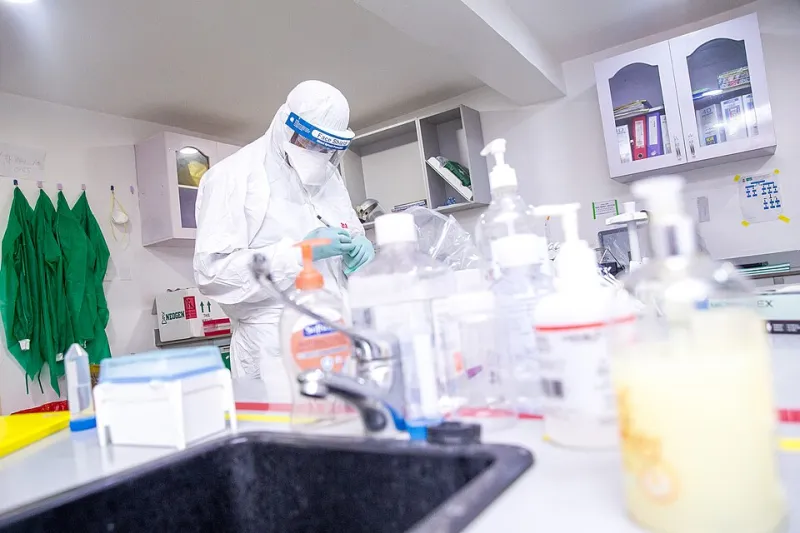
Photo: Rubbyfem, CC BY-SA 4.0, via Wikimedia Commons
In the spring of 2022, our lab undertook an exercise that sounded simple in a Monday meeting and proved anything but in practice: repeat one of our own published experiments, end to end, three years after the original study appeared.
The paper in question, a 2019 study on transcriptional responses in our model system, had been cited comfortably and replicated in spirit by collaborators elsewhere. But no one — including us — had ever re-run the full protocol from scratch. We decided that gap was worth closing, and we committed to documenting every obstacle we hit along the way.
Week One: The Reagent Lot Problem
The first friction point arrived before we touched a pipette. The original experiments used a specific antibody lot, long since discontinued. Lot-to-lot variability in antibodies is well known, yet our methods section — like most methods sections written in the late 2010s — recorded the vendor and catalog number but not the lot, and certainly not the validation behavior of that particular batch.
We procured a current lot, ran a side-by-side validation against a frozen aliquot of the original material, and got a slightly different signal-to-noise profile. Not enough to overturn the finding. Enough to make us understand why independent groups sometimes struggle to hit published effect sizes exactly.
The Passage Number Nobody Wrote Down
Cell culture histories are the quiet ghosts of molecular biology. Our 2019 notebook recorded the cell line, the medium, and the incubation conditions with admirable thoroughness — and said nothing about passage numbers at the time of the key experiments. A postdoctoral fellow from that era, now running her own group in the Midwest, confirmed via email that the cells were early passage, "probably under twenty." Probably.
We re-established the line from a frozen vial, tracked passages meticulously this time, and observed that the phenotype we reported was robust across the range we tested. The result held. But the uncertainty was instructive: had the effect been subtle, that one undocumented variable could have consumed months.
Reading Our Own Methods Like a Stranger
The most humbling exercise was assigning a first-year graduate student to reproduce the experiment using only the published methods section — no lab notebook, no verbal coaching. She flagged fourteen ambiguities in four pages. Which centrifuge speed, in which rotor, measured how? What counted as "gentle resuspension"? Was the wash buffer at room temperature or on ice?
Every one of those ambiguities was invisible to us, the authors, because we knew the answers without realizing they needed writing down. This is the ordinary way that reproducibility erodes — not through fraud or carelessness, but through the quiet assumption that the reader is us.
Why Self-Replication Deserves to Be Publishable
We believe labs should treat internal replication as a routine, documented practice rather than an occasional act of virtue. Journals are increasingly receptive to replication reports, and preprint servers make the barrier to sharing them low. A negative or partially confirmatory self-replication, published candidly, is worth more to the community than a third confirmatory citation.
A Practical Checklist for Self-Replication
Labs considering a similar audit might start here:
- Assign a reproducibility-naive executor. Someone who did not do the original work should lead, using only the published paper as a guide.
- Log every deviation in real time. Reagent lots, passage numbers, instrument IDs, ambient conditions — the details you think don't matter are the details that do.
- Set a decision rule in advance. Define what counts as confirmation, partial confirmation, or failure before you see the data.
- Time-box the effort. We allotted one semester. A deadline prevents the audit from dissolving into a perpetual side project.
- Write it up, whatever the outcome. Deposit the report as a preprint or an addendum, and update your methods section while the frustrations are fresh.
What We Take From It
Our 2019 finding survived the audit, and we consider ourselves fortunate. More importantly, the process left us with a sharper methods section for the follow-up study, a culture in which documenting passages and lots is reflexive, and a first-year student who now writes protocols as if a stranger's success depends on them — because it does.
Reproducibility is not a test you pass once. It is a habit you renew, experiment by experiment, notebook entry by notebook entry.