Inheriting the Bench: What a Quarterly Transfer Drill Exposes About Institutional Memory
Photo: Unknown authorUnknown author, CC BY 4.0, via Wikimedia Commons
On a Tuesday morning in October, a postdoctoral researcher at McKnight Lab set a timer for twenty minutes and stepped away from an active cell-culture experiment. A colleague who had never touched the project took over. The only materials available were a protocol, a freezer inventory, labeled samples, and the physical bench as it stood. No verbal download was permitted beyond the initial question: Where would you begin?
The exercise is now a quarterly fixture in the lab. It began as an internal audit of project continuity, not as a test of any individual researcher. The question was simple: if someone had to be absent tomorrow, would the work survive? The answer, in the first round, was partly yes and partly not at all.
The Rules Are Deliberately Narrow
The transfer drill is not a memory contest. The researcher handing off is allowed to prepare written notes beforehand, but those notes must be the same ones any colleague could find in the project folder. The receiving researcher must identify the next experimental step, locate the necessary materials, and name the conditions that would require stopping. An observer tracks where the recipient pauses, what they cannot find, and which questions they ask out loud.
Those pauses are the data. They reveal the difference between a protocol that describes a procedure and a record that supports a decision.
The First Failure Was Physical
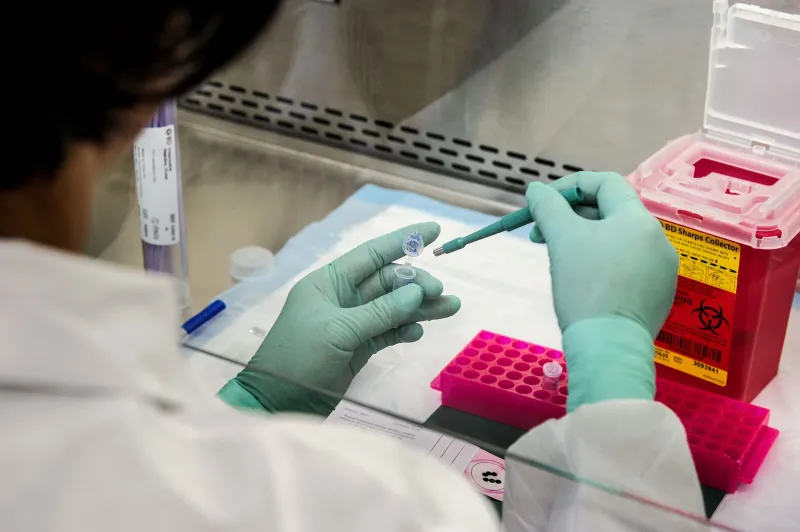
In the first drill, the receiving researcher spent nearly half the allotted time looking for a specific frozen aliquot. The freezer box was labeled with a project abbreviation and a date, but not with the owner, the construct, or the passage number. Two boxes in the same rack carried similar abbreviations. Neither label indicated which one belonged to the active experiment.
The problem was not sloppiness. It was a reasonable local convention that had never been written down because everyone who needed to know already knew. The drill made the convention visible. Within a month, the lab adopted a standard freezer-box label: project code, date, owner initials, and a short material description. The change took an afternoon to implement and has already prevented at least one near-miss during a routine inventory.
A Complete Protocol Can Still Be Incomplete
The second recurring gap was contextual rather than procedural. A protocol might instruct a researcher to add a specific volume of inhibitor, but not indicate which stock aliquot to use. In one case, the written record was technically complete and practically ambiguous. Two aliquots existed; one had thawed during a freezer alarm earlier this year and was known by the project owner to be questionable. That knowledge lived in a person, not in the record.
The lab now asks researchers to include a short context block at the top of each active protocol. It is not a narrative. It lists known anomalies, recent changes, and any material that should not be used without checking with the project lead. The block takes minutes to write and has become one of the most frequently read sections of our internal protocols.
The Social Layer Matters as Much as the Paper Trail
The drill also exposed a mentorship gap. Junior researchers often knew more about the day-to-day state of a bench than the written record suggested, but they were reluctant to correct a senior colleague's notes. In one transfer, a first-year student quietly identified that a reagent had been moved to a different shelf three weeks earlier. The receiving researcher, a visiting scholar, would not have found it without asking.
That observation led to a small change in lab meeting practice. Before each quarterly drill, a researcher who is not on the project reviews the handoff notes for obvious gaps. The reviewer is explicitly empowered to ask basic questions. The goal is not to grade the project owner. It is to normalize the idea that legibility is a shared responsibility.
What We Changed
The drill has produced four durable changes. First, a one-page transfer sheet now accompanies every active project. It records the current stage, the next action, stop conditions, material locations, known anomalies, and the person to contact if something fails. Second, freezer boxes follow the standard label described above. Third, protocols include the context block. Fourth, the drill is scheduled away from grant deadlines, because a stress test conducted under maximum fatigue teaches the wrong lesson.
None of these changes required new software. The lab already had a protocol repository and an inventory system. What was missing was a habit of writing for the person who inherits the work rather than for the person who already understands it.
The Limit of Twenty Minutes
Twenty minutes is arbitrary, and the lab knows it. Some experiments cannot be transferred in that window, especially those involving time-sensitive collections or complex instrumentation. The limit is useful precisely because it forces prioritization. It asks: what would a competent colleague need in order to avoid harming the experiment or themselves? The answer is rarely everything. It is usually a short list of locations, warnings, and next steps.
The drill does not eliminate tacit knowledge. A skilled researcher still learns by watching, by repeating a technique, and by making mistakes under supervision. What the drill does is identify where tacit knowledge is load-bearing. Those are the places to invest in documentation, mentorship, and redundancy.
Why This Belongs in Lab Culture
Institutional memory is often treated as a byproduct of good hiring and long tenure. The transfer drill treats it as a practice that can be exercised. For students, it teaches that good science includes making work legible to others. For senior researchers, it is a reminder that a project is not fully understood until someone else can pick it up.
The next quarterly drill is already on the calendar. The project will be different, and the failures will be different. That is the point. The lab is not trying to produce a perfect handoff. It is trying to find the gaps before an unplanned absence does.