When the Timepoints Don't Sleep: How Our Lab Learned to Support the People Who Run the 3 A.M. Collections
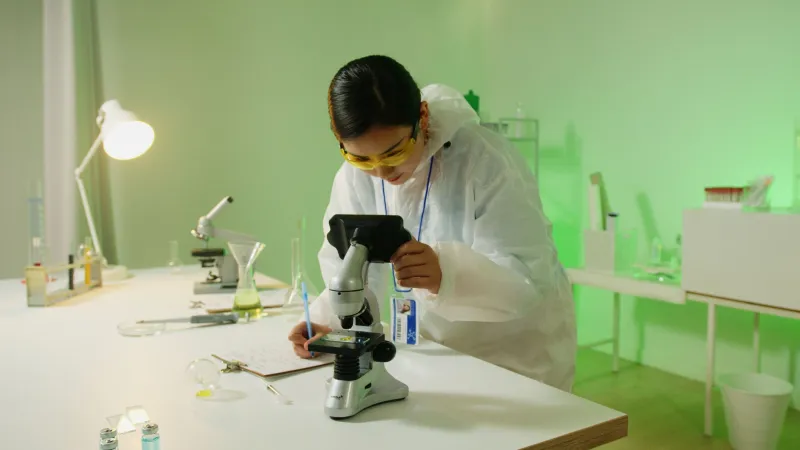
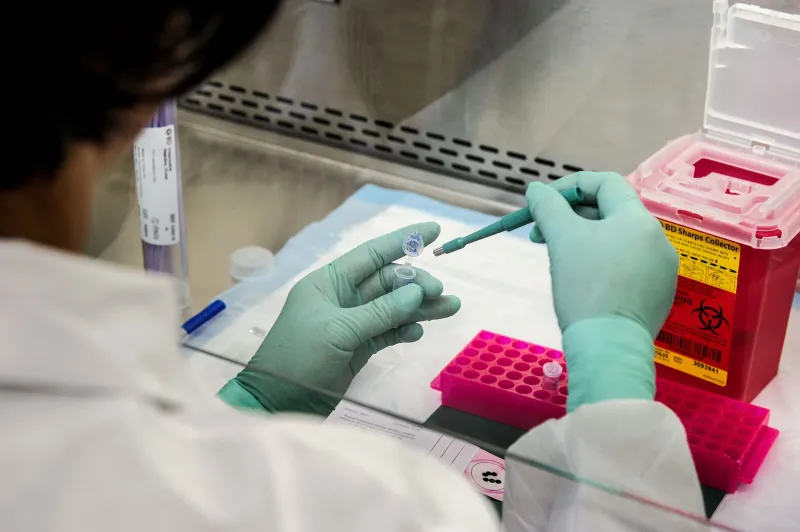
The fourth timepoint lands at 2:45 a.m. There is no negotiating with it. The kinase cascade we are measuring does not care that the person harvesting it has an organic chemistry midterm at 9 a.m., and the confocal booking does not care that the building's east wing locks at midnight. The experiment simply requires that a human being be present, pipette in hand, while the rest of the campus sleeps.
At McKnight Lab, we have run enough round-the-clock studies to know that the science of the overnight shift is really a science of logistics, fairness, and design. This article is our attempt to write down what we have learned—partly because we got a lot of it wrong before we got it right.
The Biology Does Not Keep Office Hours
Molecular biology is indifferent to the standard workday. Protein degradation curves run on their own clocks. Circadian experiments, by definition, demand sampling at hours that would make a flight scheduler wince. A 48-hour time course with six-hour intervals means collections at midnight, 6 a.m., noon, and 6 p.m.—and the inconvenient ones are just as important as the convenient ones.
Early in my career, the lab treated these hours as an afterthought. The overnight collections were implied, untracked, and unpaid. Whoever was hungriest for data—or least able to say no—took the shift. That model worked until it didn't, and what broke was not the experiment. It was the people.
Who Actually Runs the Night Shift
In most academic labs in the United States, overnight work falls to a predictable group: undergraduates earning course credit or hourly wages, research technicians, and occasionally a postdoc chasing a deadline. Our own overnight roster over the past five years has skewed heavily toward undergraduates from the University's work-study program and two long-serving lab technicians.
These are often the least empowered people in the building. They may not feel comfortable pushing back on a principal investigator's request. They are navigating class schedules, financial aid requirements, and family obligations. And yet the integrity of a $40,000 study can rest on whether they show up groggy at 3 a.m. and label the tubes correctly.
We audited our own records last spring. Of the 62 overnight sessions logged since 2019, undergraduates performed 41. That statistic reframed the conversation for us. This was not a scheduling nuisance. It was a labor practice, and it deserved scrutiny.
What We Got Wrong
The failures were mostly failures of imagination. We assumed that anyone willing to take an overnight shift was enthusiastic rather than economically constrained. We scheduled collections without consulting class calendars. We provided no transportation support for students walking home across a dark campus at 4 a.m.—a genuine safety concern at any American university. We never once asked whether a 3 a.m. harvest produced data as clean as a 3 p.m. harvest, even though the literature on sleep deprivation and manual error suggests it might not.
Worst of all, the overnight contributors were largely invisible in the authorship and acknowledgment decisions that followed. The person who guarded the imaging window at 2 a.m. appeared, if anywhere, in a methods sentence.
What We Changed
Three interventions have made a measurable difference:
1. Compensated shift scheduling. Overnight collections are now treated as billable labor with a premium rate, budgeted into every grant proposal that requires them—line-itemed like antibody orders or sequencing fees, not scraped together informally.
2. The two-person rule. No overnight session runs solo. It improves safety, halves the boredom, doubles the error-checking, and has quietly become our most popular policy.
3. Rides home and rest windows. We budget campus escort service calls and forbid lab duties within twelve hours after a completed overnight run. Data quality improved. So did retention.
We also started asking a question we should have asked years ago: can we design the experiment so fewer 3 a.m. hours exist at all? Automated samplers, plate readers with timed injections, and incubator-mounted imaging have eliminated perhaps a third of our manual night collections. Sometimes the best way to support night-shift science is to engineer the night shift out of it.
A Modest Institutional Proposal
Grant budgets in the United States itemize everything from freezer space to animal per diems. They almost never itemize the human cost of circadian labor. We think that should change. A line for overnight technical support—one that names the people, the hours, and the compensation—would force labs and funders alike to confront the true cost of a time course.
Until then, the responsibility sits with individual labs. Our position is simple: if the experiment cannot wait for morning, then the care we take with the person running it cannot wait either. The vending machine in the hallway is a start. The two-person rule, the paid shift, and a name on the paper are better.
The fourth timepoint will land at 2:45 a.m. again next month. Someone will be there for it. The least the rest of us can do is make sure that showing up is safe, paid, and seen.