The Forms That Came Back Blank: Eighteen Months of Learning to Hear About Accidents Before They Happen
A quiet launch and an uncomfortable baseline
In spring 2025, McKnight Lab introduced an anonymous reporting channel for near misses: the spill that was contained before it reached a drain, the sharps container that was overfilled but not yet punctured, the freezer alarm that sounded during a holiday weekend, the chemical bottle stored one shelf away from an incompatible neighbor. The intent was simple. If the lab could hear about events that almost caused harm, it could correct conditions before an injury or a loss made the lesson mandatory.
The first quarter produced nine entries. For a lab of our size, that number was not reassuring. It was suspicious.
No one believed that a research group running dozens of experiments each week had only nine near misses in three months. The blank forms were not evidence of safety. They were evidence of doubt. People were not sure the channel was truly anonymous, not sure a report would lead to anything useful, and not sure that naming a close call would be treated as caution rather than clumsiness.
The near-miss log nobody wanted to write became, for a while, the near-miss log nobody wanted to read. That was the first finding.
Why silence is not safety
The lab’s safety committee reviewed the early months and decided not to advertise harder. A louder campaign for a channel nobody trusted would have produced compliance, not candor. Instead, the committee asked a smaller question: what would make a person comfortable filing a report at the moment when they felt least comfortable?
The answers were practical. The original form asked for too much context—location, time, task, materials, outcome, and a free-text description all on one screen. It also implied, through its structure, that a useful report had to be a complete account. That discouraged the partial report: the half-remembered detail, the incident noticed by someone who was not directly involved, the concern that had not yet become an event.
The channel was rebuilt around the smallest useful unit of information. A reporter could submit a single sentence. Location and time were optional. A drop-down menu allowed broad categories without forcing identification of a person or a specific bench. The review process was separated from supervisory lines, and every report was read by two committee members who had no role in performance evaluation.
Most importantly, the lab began publishing what changed. Not who reported. Not where. What changed.
Rebuilding the channel around trust
Trust in a near-miss system is not built by assurances. It is built by visible consequences. Beginning in late 2025, the safety committee posted a monthly one-page summary in the lab’s internal workspace. Each summary listed the number of reports received, the categories involved, and any protocol or equipment change under consideration. Reports that required no action were acknowledged with a short note explaining why.
That last point mattered. A channel that only responds when it acts teaches reporters that silence is the normal outcome. A channel that explains its reasoning teaches reporters that the report entered a system.
The committee also stopped treating anonymity as a binary. The form allowed anonymous submission, but it also allowed a reporter to volunteer a name for follow-up while keeping the report itself out of personnel files. Some people wanted a conversation. Others wanted only to leave a note. The channel had to accommodate both without turning the second choice into a lesser one.
By the end of 2025, monthly submissions had risen to the low twenties. By mid-2026, they had stabilized in the thirties. The increase did not mean the lab had become more dangerous. It meant the lab had become more willing to describe what was already happening.
What eighteen months of reports showed
Across eighteen months, several patterns emerged that no single incident could have revealed.
Freezer alarms clustered around weekends and holiday closures. The reports rarely described equipment failure. More often they described a door that had not sealed, a rack that had been pushed too close to a sensor, or a backup contact who was unavailable. The lab added a two-person closure checklist for shared freezer banks and a simple visual indicator on doors that had been opened during the previous hour.
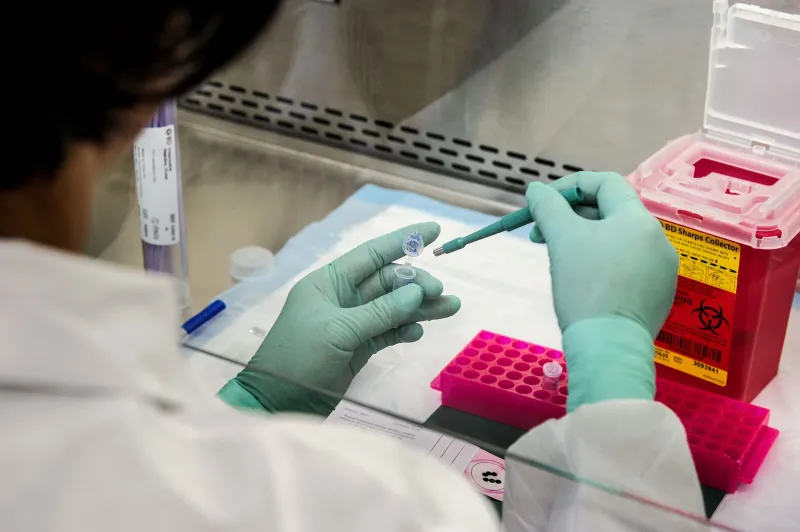
Sharps near misses concentrated at the point of disposal, not at the bench. Containers were being filled past the marked line because replacements were stored in a different room. The fix was not a new training module. It was a second container kept within arm’s reach of the highest-use bench and a weekly check assigned to the lab’s rotating safety steward.
Chemical-storage close calls most often involved secondary containment. Bottles were correctly capped but incorrectly paired during transport. Reports described carts loaded for efficiency rather than compatibility. The lab now uses a labeled transport tray system and a one-page compatibility card attached to each cart. The card is not a substitute for training. It is a prompt at the moment when training is least likely to be recalled.
Spill reports were fewer, but they shared a common feature: most occurred during transfer between rooms, not during experimental work. The committee added a small number of sealed transport boxes and revised the lab’s standard route for moving liquid cultures.
From reports to revisions
None of these changes is dramatic. That is the point. Near-miss reporting is not a system for producing grand reforms. It is a system for producing small, timely corrections before a larger event forces them.
The lab has also learned to be cautious about overreading the data. A rise in reports can mean improved trust or a genuine increase in hazardous conditions. A drop can mean safer practice or a channel that has gone quiet again. The committee now reports both counts and context, and it explicitly asks each quarter whether the channel still feels usable.
Anonymity remains imperfect in a lab small enough for details to be identifying. The committee does not pretend otherwise. It limits access to raw reports, summarizes themes rather than incidents, and reviews its own handling annually.
The log we keep
Eighteen months in, the near-miss log is no longer blank. It is also not a monument. It is a working document that records the accidents that did not happen and the small revisions that followed. The lab keeps it because the alternative is to learn only from injuries, exposures, and losses—and because the quietest months taught us that silence is often a form of missing information.
A useful safety culture does not wait for a bad outcome to justify attention. It asks people to describe the bad outcome that nearly occurred, and then it proves that the description mattered.