Six Months of Someone's Life: The Internal Pilot Fund That Decides Which Long Shots Get a Shot
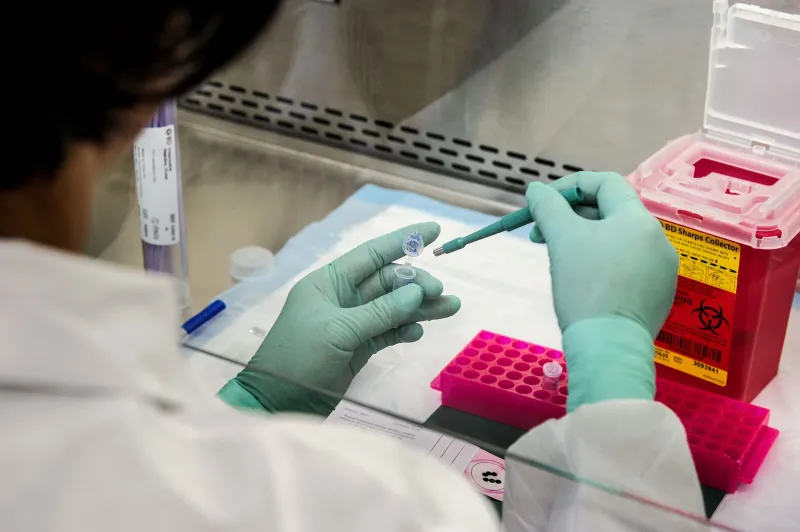
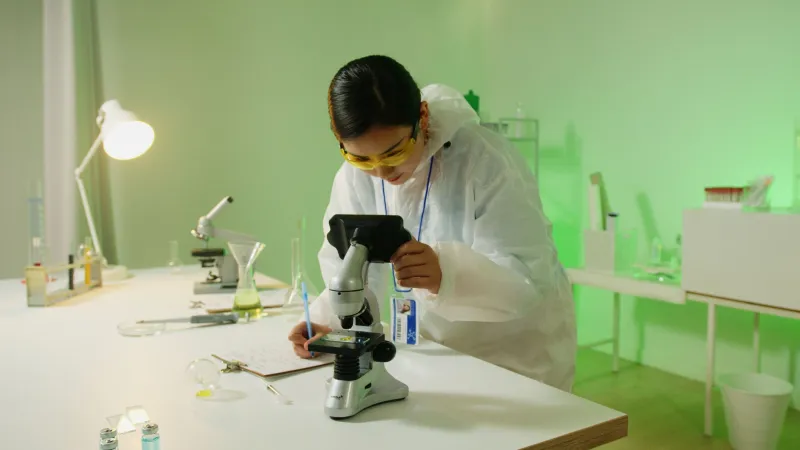
Every autumn, McKnight Lab sets aside a modest slice of its discretionary budget—call it seed money, call it a slush fund, call it what it really is: a bet on ideas too half-formed to survive a grant review. The pot is small. It funds roughly two projects a year at the level of consumables and a semester of a graduate student's protected time. What it buys, when it works, is a preliminary dataset that turns a hunch into a fundable aim. What it buys when it doesn't work, we've come to believe, is nearly as valuable.
The fund has been running for four years. This article is an honest accounting of how it operates and what its track record actually looks like.
Why a Formal Process for Informal Ideas
Before the pilot fund existed, exploratory projects in this lab lived or died by hallway conversation. The postdoc who caught the PI in a good mood got six months. The quiet first-year with the same idea got nothing. That's not a meritocracy; it's an accident of scheduling.
The fix was procedural rather than financial. Twice a year, any lab member—undergraduates included—may submit a one-page proposal. No preliminary data required. In fact, preliminary data are treated with suspicion, because the point of the fund is to test ideas nobody has paid to test yet. Proposals are anonymized, reviewed by a rotating committee of three lab members plus the PI, and scored on two axes: potential impact if true, and cost of learning it's false.
That second axis matters more than people expect. A pilot project that fails after six months of one person's time is a tuition payment. One that fails after two years of three people's time is a setback with a human cost attached.
Three That Got Funded
The first funded proposal came from a second-year graduate student who suspected that a commonly used fixation protocol was degrading a phosphoprotein signal in our primary assays. The idea ran counter to a method the lab had published on twice. She got four months and a small antibody budget; the result was a well-controlled negative, and the lab quietly changed its protocol. The finding was never published on its own, but it has been cited in the methods sections of three subsequent papers from this lab.
The second was a postdoc's proposal to test a CRISPR-based perturbation in an organoid system we had no experience with. That one worked—genuinely worked—and produced the pilot data behind an R21 application currently under review. This is the outcome every lab hopes for, and it is the least instructive of the five.
The third, proposed by an undergraduate, asked whether a low-cost open-source incubation chamber could replace a $12,000 commercial unit for one routine assay. It could, mostly. The build instructions now sit on our public protocols page, and two other labs have written to say they built one.
Two That Weren't
The rejected proposals are less documented by nature, but two are worth describing because both came back later.
One, a speculative screen involving a technically demanding single-cell preparation, was declined on the cost-of-failure axis: the committee judged that six months was too short to climb the learning curve. The proposer instead arranged a collaboration with a lab that already had the expertise, and the project is now underway without consuming our pilot budget. The rejection pushed the idea toward a better home.
The other rejected proposal was declined for a reason we still debate: the committee found the hypothesis implausible. The proposer left the lab a year later, and the hypothesis was subsequently supported by a paper from a group in Europe. We keep that one in the file as a corrective against committee confidence. Plausibility, we learned, is a poor proxy for truth, and the fund's review criteria have since been revised to weight impact and cost of failure over reviewers' prior beliefs.
A Framework Other Labs Can Borrow
Four years in, the rules that seem to matter:
- Protect the person, not just the money. Funded proposals come with protected time negotiated with the student's other commitments. Seed money without time protection is a trap.
- Score the downside. Ask explicitly: if this fails, what has the person gained that a CV will show? A new skill, a negative result, a collaboration?
- Anonymize the first read. Junior members' proposals should not be discounted because their names are unfamiliar.
- Distrust plausibility. The committee's job is to assess cost and impact, not to play oracle.
- Write the postmortems down. Failed pilots that vanish without documentation will be re-proposed in three years by someone who doesn't know they failed.
What the Fund Is Really For
The honest answer is culture, not data. A lab where a first-year can put a one-pager in front of a committee and be taken seriously is a lab where people learn to think like independent scientists before they have to. The R21 application may or may not fund. The open-source incubator may be a footnote. But the practice of proposing, defending, and—when necessary—gracefully abandoning an idea is the actual product.
We would encourage any lab with a few thousand dollars of flexibility to formalize something similar. The framework above is ours; adapt it freely, and tell us what you change.