Impostor Cells: The Day Our Flagship Line Failed Its DNA Test
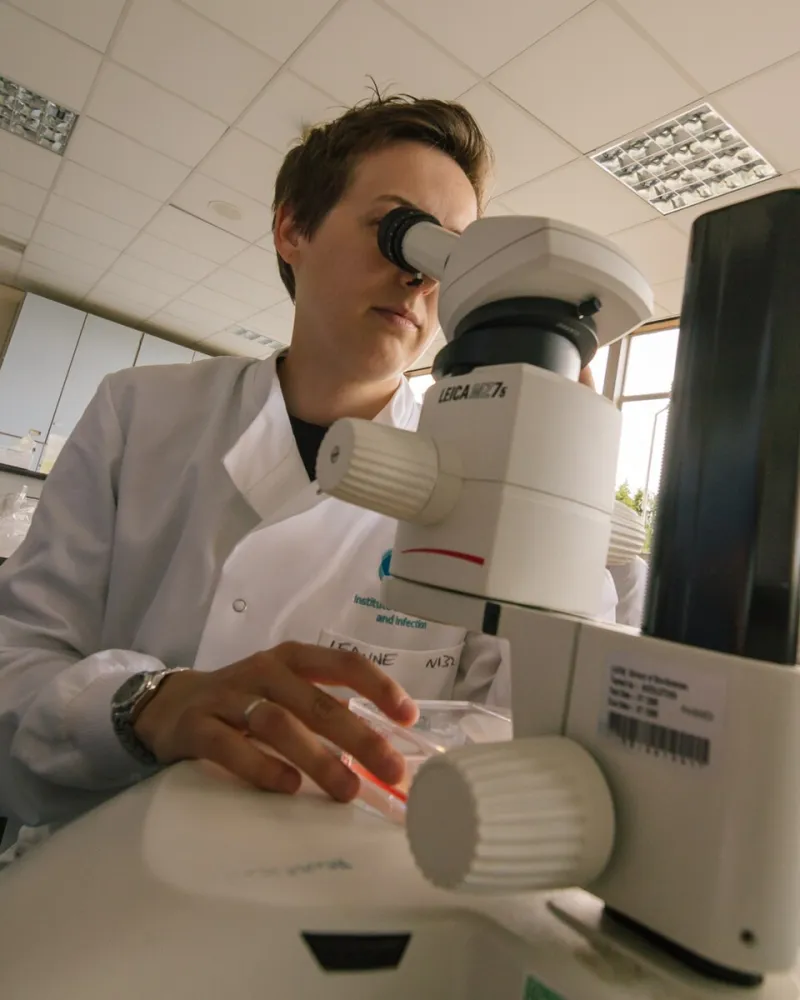
Photo: Peter Saxon, CC BY-SA 4.0, via Wikimedia Commons
In the spring of 2023, a routine quality-control run in our lab produced a result that none of us wanted to see. The STR profile of the cell line at the center of our longest-running project — a line we had passed from postdoc to graduate student like a family heirloom for five years — did not match the reference profile published by the originating repository. Our workhorse, it turned out, was an impostor.
A Slow-Motion Discovery
The line had entered the lab the way most lines do: through a collaborator, who had obtained it from a former colleague, who had received it from an institution no one could quite remember. It grew well. It stained consistently. It produced data that fed two manuscripts and a grant renewal. Nothing about its behavior in culture raised an alarm.
What finally exposed it was not a failed experiment but a reviewer's question. During revision of a manuscript, a journal editor asked whether we had authenticated the line within the past two years, per the standards promoted by the International Cell Line Authentication Committee (ICLAC). We had not. We sent a sample for STR profiling expecting a formality. Instead, we received a profile belonging to an entirely different donor.
The immediate consequences were painful. One manuscript required a note of correction. A chapter of a doctoral dissertation had to be reframed around a re-derived line. The graduate student who had built most of the project spent a semester repeating experiments — work that, to her credit, became the strongest part of her thesis.
Why This Keeps Happening
Our lab is not an outlier. Estimates suggest that a substantial fraction of cell lines used in published research are misidentified or cross-contaminated, and the problem has been documented since the 1960s, when Stanley Gartler first showed that many 'human' lines carried HeLa markers. The failure mode is structural, not personal: lines travel through informal networks, passaging history goes unrecorded, and authentication costs money that rarely appears in a grant budget line.
The deeper issue is cultural. In many US labs, authentication is treated as a hoop to jump through at publication rather than a routine practice that protects the science from the first day. That inversion is exactly backwards, and our experience taught us why.
What We Changed
We rebuilt our cell line practices from the ground up. The result is a short, practical protocol that any molecular biology lab can adopt without new infrastructure:
1. Authenticate at arrival. Every new line — whether from a repository, a collaborator, or a commercial vendor — gets STR profiling (or species-specific barcoding for non-human lines) before it enters the main culture rotation. No exceptions, no matter the source.
2. Authenticate before it matters. Lines are re-profiled every six months and before any critical experiment, not merely before submission.
3. Buy from repositories, not attics. We now source exclusively from ATCC, the Coriell Institute, ECACC, or other accredited repositories, and we treat 'a friend's freezer' as a last resort requiring full re-derivation.
4. Mycoplasma testing is not optional. Every line is tested quarterly. Contaminated cultures behave unpredictably, and the artifact can masquerade as biology.
5. Write it all down. A one-page cell line passport — source, authentication date, passage limit, media, operator — travels with each line. Our template is freely available on the lab website.
6. Set a passage ceiling. We retire lines after 20 passages or six months, whichever comes first, and thaw a fresh authenticated vial.
The Uncomfortable Part: Telling People
The hardest step was not technical. It was informing collaborators that data generated with the misidentified line needed qualification. We chose full disclosure, and the response surprised us: two collaborators thanked us for flagging the issue, and one subsequently discovered the same problem in their own freezer. Openness about a mistake, it turns out, is contagious in the best way.
We have since published our corrected data with the authentication certificates deposited alongside it. The reworked project is healthier than the original — the re-derived line, ironically, showed cleaner behavior than the impostor ever did.
A Modest Proposal for the Field
If there is a lesson beyond our own walls, it is this: authentication should be budgeted like reagents and reported like methods. Journals increasingly require it, but the burden should not rest on the moment of submission. Labs that profile early, document thoroughly, and share their protocols openly will spend less time retracting and more time discovering.
Our freezer now contains no mysteries. That is exactly how it should be.