Beyond E. coli: Why the Next Antibiotic May Be Waiting in the Soil Beneath Your Feet
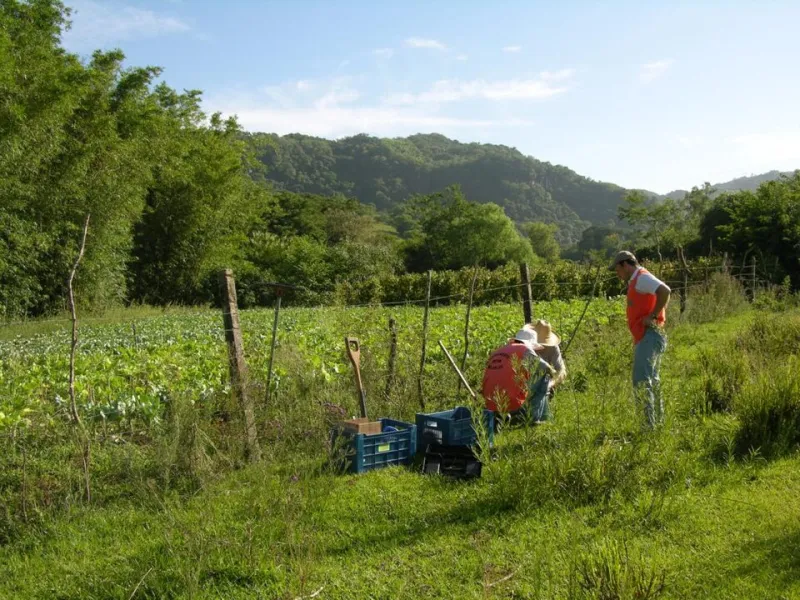
Photo: Prof. Dr. Alessandro Samuel-rosa, CC0, via Wikimedia Commons
Walk into most molecular biology laboratories in the United States and you will find the same cast of characters: Escherichia coli in the incubator, Saccharomyces cerevisiae in the refrigerator, perhaps a line of HeLa cells in the tissue culture room. These workhorses earned their status honestly. Decades of accumulated tools, mutant collections, and shared knowledge make them efficient. But efficiency has a cost, and that cost is the enormous microbial diversity we have chosen not to study.
The Model Organism Bottleneck
Estimates suggest that fewer than one percent of bacterial species can be cultured under standard laboratory conditions, and an even smaller fraction have been developed as model systems. The consequence is a self-reinforcing loop: we study organisms we can grow, we build tools for the organisms we study, and funding follows the organisms with the most tools. Everything else — the majority of life on Earth — remains a black box.
That black box matters now more than ever. Antimicrobial resistance is projected to be associated with millions of deaths annually in the coming decades, according to US public health agencies, and the pipeline of new antibiotic compounds has thinned considerably. Historically, most of our antibiotics were derived from soil-dwelling Actinobacteria. We simply stopped looking, in large part because rediscovery rates became discouraging. But the organisms we can easily culture represent only a sliver of the chemical diversity that exists in a single handful of prairie soil.
What Changes When You Leave the Workhorses Behind
Working with a non-model organism is an exercise in humility. Protocols cannot be pulled from a supplier's website. Transformation efficiency may be near zero. Growth conditions may be finicky, slow, or poorly documented. Genetic tools — promoters, selectable markers, inducible systems — must be built from scratch or adapted from distantly related species.
Yet the technical barriers are falling faster than most researchers realize. Long-read sequencing platforms now allow complete genome assembly of an unusual isolate within days. CRISPR-based editing tools, originally developed in model systems, have been successfully ported into dozens of non-model bacteria. Metagenomics lets us interrogate entire communities without culturing anything at all, and biosynthetic gene cluster prediction software can flag candidate antibiotic pathways directly from sequence data. A laboratory that would have needed years to establish a new model system in the 1990s can make meaningful progress in a semester today.
A Distributed Model for Discovery
Perhaps the most encouraging development is structural rather than technical. Programs modeled on small-instrument, course-based research frameworks have seeded microbial discovery across hundreds of primarily undergraduate institutions in the US. Students at regional universities and community colleges — institutions far from the major genomics centers — are isolating local organisms, sequencing their genomes, and depositing the data in public repositories. Each strain becomes a permanent, openly accessible resource.
This is open science operating as intended. Rather than concentrating discovery in a handful of well-resourced laboratories, the network distributes it broadly, with every genome and protocol shared. A soil isolate from a Kansas pasture or a Michigan forest floor may sit in a publicly available database, its biosynthetic potential annotated and waiting for someone with the right question to find it.
What We Are Doing About It
At McKnight Lab, we have begun allocating a defined fraction of our bench capacity to uncharacterized environmental isolates, with all sequences and methods deposited openly. The yield per hour invested is undeniably lower than running another experiment in a familiar system. But the ceiling is entirely different. Model organisms answer the questions we already know how to ask. Non-model organisms ask us to develop new tools, new assays, and sometimes new questions entirely.
The next generation of antibiotics will not come from studying E. coli harder. It will come from researchers willing to accept slower protocols, ambiguous literature, and organisms with no common name — and from an infrastructure that makes every genome they generate public the moment it is assembled. The dirt has been holding up its end of the bargain. It is time the field met it halfway.