Two Hours, No Exceptions: The Documentation Policy That Rewired How Our Lab Thinks
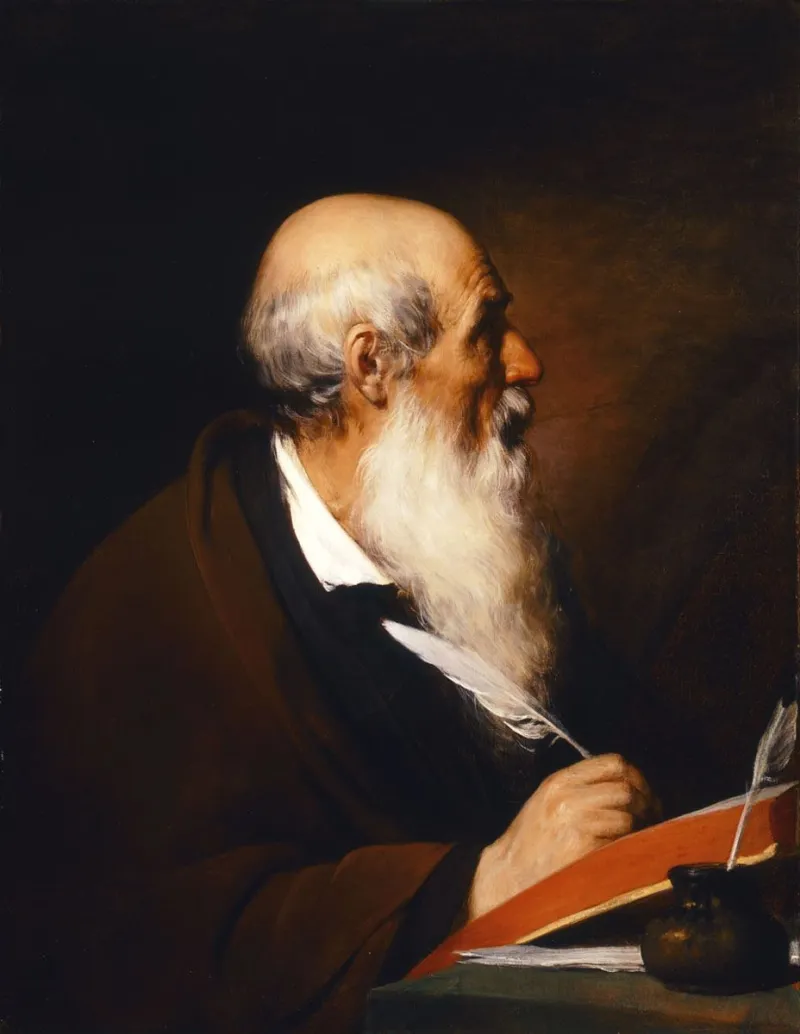
Photo: Friedrich von Amerling, Public domain, via Wikimedia Commons
The Policy, Stated Plainly
Every person in McKnight Lab, regardless of title or funding source, reserves two hours each weekday for writing. Not pipetting, not analyzing, not answering email — writing. The block covers what was done at the bench, what was observed, what it might mean, and what remains unclear. Meetings can displace it. Deadlines cannot. The rule applies to the PI on the same terms it applies to a rotation student.
When we describe this policy to colleagues at other institutions, the reaction is predictable: admiration followed immediately by the observation that it would never survive contact with a real lab. We understand the skepticism. We shared it. What follows is an account of how the rule came to exist, what it cost us, and what a year of honest measurement showed.
The Near-Disaster That Started It
The policy traces to an incident we have described internally as the lost December. A senior graduate student, weeks from defending, developed a severe illness and was hospitalized for eleven days. Her flagship experiment — a western blot series supporting two figures of her dissertation — existed in three places: her memory, a partially updated electronic notebook, and a set of unlabeled scan files on a shared drive with no annotation.
She recovered fully. Her data did not. Repeating the work consumed five months and pushed her defense across the academic year, past a postdoc start date she had already signed for. The lab absorbed the cost without complaint, but the post-mortem meeting was uncomfortable in a productive way. The question on the whiteboard was simple: if any of us disappeared for two weeks tomorrow, could our work be continued by someone else? For most projects, the honest answer was no.
Why Two Hours, and Why Everyone
The initial proposal was voluntary documentation time. It failed within three weeks, as voluntary systems in labs usually do. The people who already wrote extensively kept writing; the people who needed the habit most skipped it. We concluded that a norm only becomes a norm when it is universal, and that the PI's participation was non-negotiable. Nothing undermines a lab policy faster than a PI who exempts themselves.
Two hours emerged from experiment rather than theory. Thirty minutes produced summary writing — clean, confident, and largely useless for replication. Four hours produced resistance and resentment. Two hours proved long enough to record protocol deviations, raw observations, and genuine uncertainty, and short enough that no one could plausibly claim they lacked the time.
The First Semester Was Rough
We will not pretend the rollout was smooth. Two lab members interpreted the mandate as micromanagement. One argued, not unreasonably, that writing time was time stolen from experiments. Our solution was to make the purpose explicit: the notebook is written for a stranger — a future lab member, a reviewer, a collaborator — not for the author. We adopted a standard we call the stranger test: could a competent scientist who has never seen this project reproduce the experiment from your entry alone?
We also made the writing protected. During the two-hour block, meetings are not scheduled, seminars are not held, and the PI does not send requests. Protecting the time institutionally was as important as requiring it.
What Changed After One Year
We track metrics the way we track any experiment, and we publish them here without adjustment.
- Onboarding time. New members previously needed a median of nine weeks to run an established protocol independently. After the policy, that figure fell to five.
- Reproducibility audits. We sample one completed experiment per quarter and attempt replication from the notebook alone. Our first-year replication success rate rose from roughly 60 percent to 88 percent.
- Authorship disputes. These did not vanish, but they changed character. When contribution records exist in dated, time-stamped entries, conversations about author order rest on evidence rather than recollection. We resolved our two disputes in the past year in under an hour each.
- Failed experiments. Entries now record negative results in searchable detail. Our dead-ends archive, once thin, has become genuinely useful — at least three projects avoided repeating a documented failure in the past year.
The Template We Use
We provide our notebook template freely on the lab site. It asks for five elements per entry: the day's objective, the exact protocol version used, raw observations before interpretation, an interpretation section that is allowed to be wrong, and an open questions section. The last field is the one people come to value most. Writing down what you do not know, daily, is a discipline that improves experimental design in ways we did not anticipate.
An Honest Caveat
The policy costs something real: roughly two hours per person per day that does not go to the bench. For a lab measuring output purely by experiment count, that is a genuine tax. We believe — and our data suggest — that the tax purchases reproducibility, continuity, and a lab that survives transitions intact. But labs differ, and we offer this account as one data point, not a prescription.
What we will say without hedging: the lost December was preventable, and it would have cost us far less than two hours a day to prevent it. We wish we had started sooner.