Thirty Days, One Spreadsheet: Auditing the Invisible Pipeline Behind Every Experiment We Run
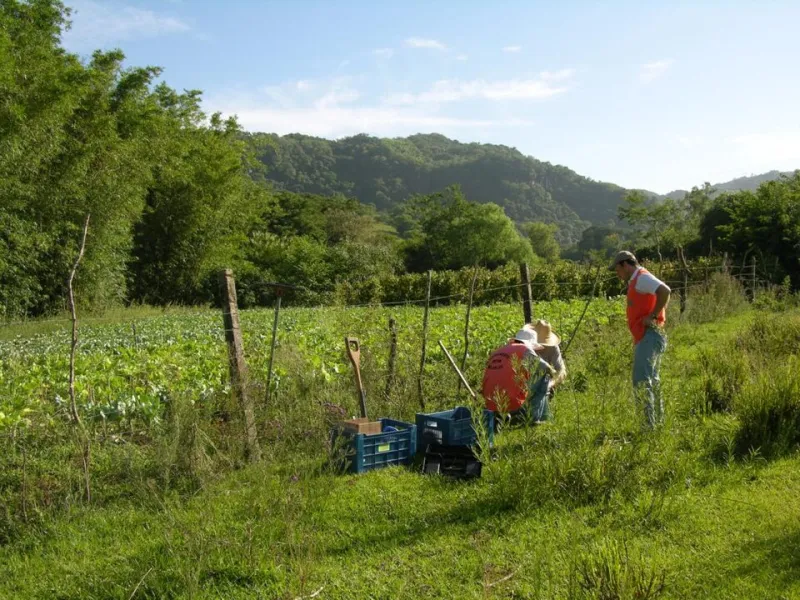
Photo: Database Center for Life Science (DBCLS), CC BY 3.0, via Wikimedia Commons
Most principal investigators can name the concentration of every antibody in their freezer but cannot name the company that actually manufactured it. We discovered this about ourselves last spring, when we decided to spend thirty days documenting every single reagent order that passed through McKnight Lab.
The premise was simple. A shared spreadsheet, a mandatory entry for every purchase — catalog number, vendor, quantity, lot, and, where we could find it, the original manufacturer. What began as a routine logistics exercise became something closer to an audit of our entire scientific operation.
The Order That Started It All
The project grew out of a minor annoyance. A monoclonal antibody we had used, on and off, for four years arrived in a different box than usual. The datasheet had changed. The clone name was the same; the performance, we later confirmed, was not. When we contacted the distributor, we learned the product had been re-sourced from a different contract manufacturer two years earlier. Nobody had told us. Nobody was obligated to.
That experience raised a question we could not shake: how much of our supply chain do we actually understand? We could cite our controls and defend our replicates, but we had no systematic picture of who makes what we pipette every day.
What the Numbers Showed
Over the month, we logged 214 orders totaling just over $38,000 — a typical month for a mid-sized molecular biology lab. Tracing items back to their point of manufacture proved harder than expected. Of those 214 orders, we could confidently identify the original manufacturer for only 62 percent.
The pattern was consistent across categories. Consumables like pipette tips and tubes flowed through two or three layers of distributors before reaching our bench. Several enzymes we had assumed came from the vendor on the label were, according to the lot documentation, produced by one of two contract manufacturers — both of which also supply our competitors. In one case, three different catalog listings from three different vendors converged on the same production facility in the same industrial park outside Boston.
We also mapped our single points of failure. Twelve items — including a critical reverse transcriptase and a cell-culture supplement — had no viable second source we could identify. If any one of those supply lines broke, experiments would stop. Not slow down. Stop.
Why Provenance Is a Scientific Problem, Not a Procurement Problem
It is tempting to file all of this under facilities management and move on. We would argue it belongs squarely in the realm of research integrity.
Reagent variability is a documented source of irreproducibility. Batch-to-batch differences in antibodies and cell lines have undermined published findings across the field. When a manufacturer quietly changes sourcing, the reagent's identity changes too — and the literature built on the old version does not annotate itself. A 2015 survey on antibody reproducibility estimated that a substantial fraction of commercial antibodies perform inconsistently across lots, and nothing in our audit suggested the underlying logistics have improved since.
Consider the analogy we apply elsewhere. We would never accept a critical control whose provenance we could not verify. Yet the reagents themselves — the physical substrate of every result — routinely pass through layers of anonymized subcontracting that we neither see nor record.
Four Practices We Adopted After the Audit
We are not arguing that labs should onshore their own enzyme production. But the exercise left us with a set of habits that cost little and buy real resilience:
-
Record the original manufacturer, not just the vendor. Our order template now includes a required field for the point of manufacture, sourced from datasheets and lot documentation. It takes thirty seconds per order.
-
Maintain a critical-reagent registry. Twelve items had no alternative source. We now keep that list current, with validated substitutes noted in advance rather than improvised during a crisis.
-
Archive lot documentation with the data. Every lot number for a reagent used in a published figure is now stored alongside the raw data. If a question arises in three years, we will know exactly what went into the experiment.
-
Share what we learn. When we discover a re-sourced product or a reliable alternative, we post it to our lab wiki — and, for items with broad community impact, to public reagent-verification resources.
An Open Problem Deserves Open Solutions
No single lab can fix a global supply chain. But the opacity we documented is, at its core, an information problem — and information problems respond to transparency. The scientific community has built shared infrastructure for cell line authentication and antibody validation. Reagent provenance is the next layer of that same project.
Our spreadsheet is available on the lab website for any group that wants a starting template. It is not elegant. It is a month of one lab's purchasing history. But it represents something we think matters: the admission that the infrastructure behind our science deserves to be seen, named, and questioned — like everything else we do.
The next time a reagent arrives in an unfamiliar box, we will not shrug. We will look it up, write it down, and add it to the record. That, in the end, is what open science asks of us — not just sharing our results, but being honest about everything they depend on.